Subscribe Via Email

Posts Tagged ‘digital innovation’

Historic Moment: Latin American Web Takes Flight

July 2nd, 2010

Latin American Web InvestmentIt’s been quite a week which, for myself and others such as Felipe DeConce (Chile) and Simon Olson (Brazil), marks an inflection point in the world of Latin American web start-ups. As I mentioned in the article published in VentureBeat and NYTimes.com, US web start-ups are starting to acquire Latin American web companies much earlier in their development process. For example, witness the recent actions by Groupon and Playdom in rapidly acquiring web companies in Latin America.

Also, I wanted to write said article because I’ve been observing the funding process of a few Latin American start-ups looking for funding in the states and I wanted to get something published on the Latin America web investment opportunities which start-ups could reference with international investors.  Although I wasn’t able to go too much into detail, I highlighted the fact that I feel Latin America offers what Warren Buffett looks for in investments which are defensible “moats” around great profit margins and growing competitive advantage.

Aditionally, VentureBeat published an article I wrote about Netactica, an Argentine web company offering end-to-end solutions to the online travel industry in Latin America.  Incredibly, yesterday, Google acquired ITA Software (relatively similar to Netactica in Latin America) in a demonstration that there is much value in these types of end-to-end solution providers in online travel.  According to a number of analysts, this acquisition changes the dynamics of the online travel booking and search market. Personally, I think that a player like Netactica has much to gain with this turn of events and, with the increasing interest on the part of international investors in Latin America, the company should benefit quite a bit.

As if this weren’t enough, I spoke last week with Fernando LaBastida and Ricardo Guerrero who have an excellent initiative with the organizers of SXSW in Austin (they live there) to include a panel on Latin America during  the next event in 2011.  Nevertheless, in order to make sure there is interest on the part of audience members, it’s important for people to suggest ideas for the panel.

I’m completely serious when I say that this week was a critical moment for the development of Latin American web start-ups.  You can be certain that investor interest will now start to accelerate at an amazingly fast pace.  Now, we need to find the most talented technical and non-technical people in the region so that these can focus on digital innovation.

In order to accelerate this, Thomas Floracks and myself are launching a weekly show (we haven’t decided the day and time, yet) so that, among other things, we can analyze one or two interesting initiatives during the show.  Note: for now, we’ll do it in Spanish, but will do a shorter recap show in English if there is interest. More details on this are coming soon.  It’s a good moment to launch this show because we need to elevate the conversation beyond comments like “look at my neat website” or “I’m going to sell xyz on the internet.”  It’s time for clear paths to profitability and solving real customer problems.

Latin American Startups – Yesterday’s News Items

June 25th, 2010

Netactica ArticleYesterday was an interesting day in “Startupland Latin America.” TechCrunch published an article about Groupon’s entry into this market by acquiring Chile’s ClanDescuento and Brazil’s ClubUrbano.  According to the article, the blogosphere is abuzz with the fact that ClanDescuento (humorously called SpamDescuento) built up its audience with a ton of spamming, which is a shame since companies such as Compra3 which I wrote about a while back, have been innovating in the space. The article also mentions a blogger called Mariano Amartino who has some interesting posts (note to myself: I need to explore more Latin American blogs).

Also, yesterday, VentureBeat published my article on a really interesting online travel company called Netactica.  This is what happens when you get two Argentineans together with an Aussie. :) You get some innovative and robust end-to-end technology to help Online Travel Agents (OTA) and others (such as the impressive guys at Mantaraya Travel) be successful in Latin America.

Mark my words. Digital Innovation is about to explode in Latin America.  There’s still a lot of evangelization to get accomplished in this region, but the list of future success stories will continue to grow from examples such as Buscapé and MercadoLibre to more and more companies getting outside funding.

Speech at Universidad Sabana

June 23rd, 2010

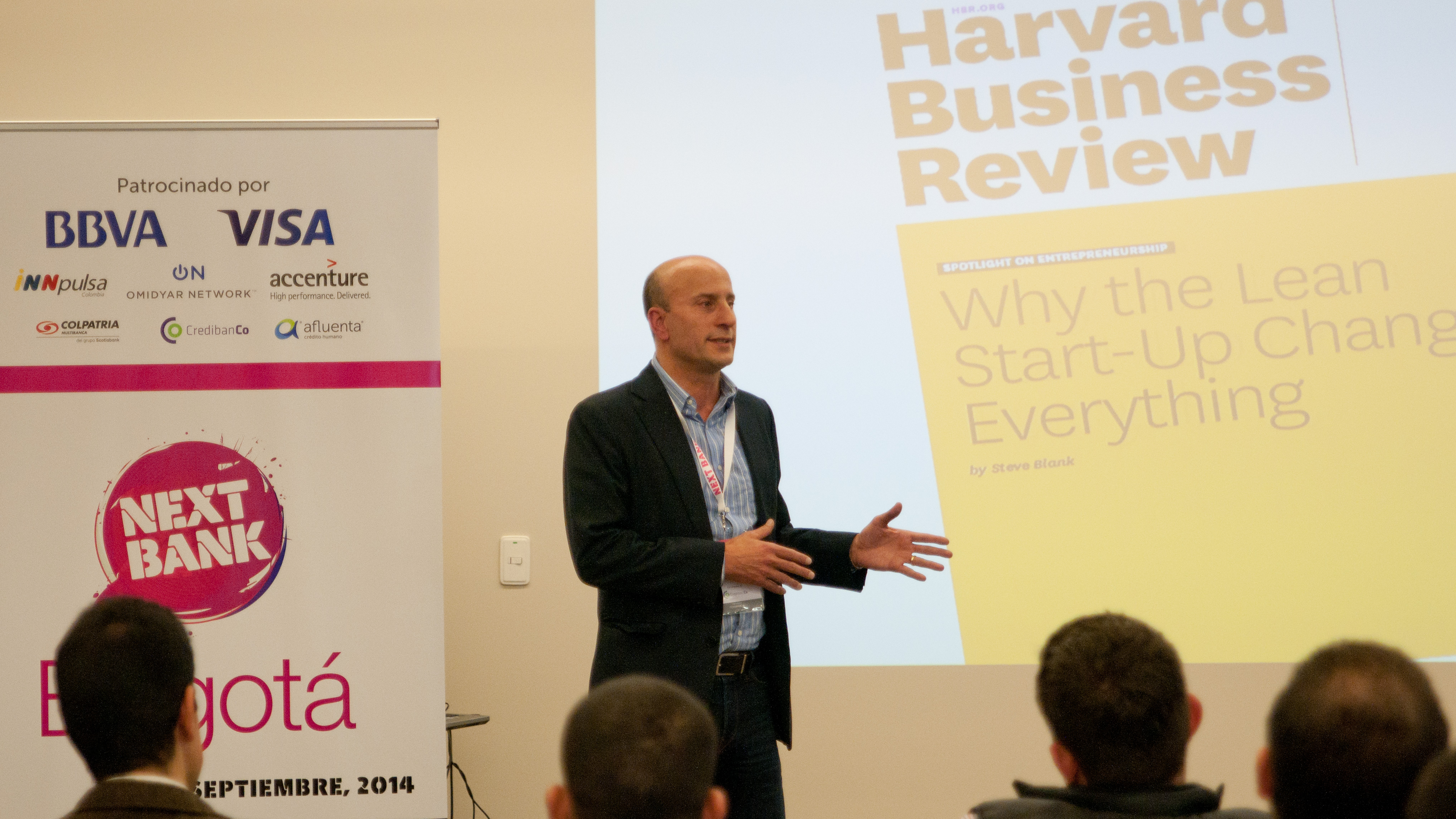
Alan ColmenaresA few weeks ago, I had the opportunity to give a speech about Digital Innovation in Latin America. It was a great experience and I appreciate Juan Correales’ invitation.  I gave the speech within the context of their annual entrepreneurial event. I was able to talk with some impressive students about their projects.

For me, it’s extremely gratifying to see so much interest in hearing about the possibilities today in terms of Digital Innovation.  Specifically, I try to evangelize the fact that people need to change their internal “chip” and understand that, in Latin America, they have the same access to gobs of information as well as having low-cost tools for creating new services and marketing these services.

Digital Startup Ecosystem in Colombia – Bogota Meetup

May 30th, 2010

Bogota AVC MeetupWell, it’s been quite an active week. I had the good fortune to talk with Arturo and Omar from Emprende.la about the state of Digital Innovation in Latin America (according to moi). If you wish, you can listen to the podcast where I discuss my Incubator project and the fact that I’m still at the initial planning stage.  I also gave a radio presentation to a local station called RCN where I spoke about Digital Innovation in Latin America. I made this presentation utilizing the web platform called Pio.la.

Finally, one of the sharpest Venture Capitalists and Angel Investors in the business (according to moi), Fred Wilson, is promoting a global series of Meetups to talk about start-ups.  Please join me next week by clicking on the widget below so we can all meet in person and discuss the current start-up environment in Colombia and Latin America and what we can do to accelerate the creation and growth of innovative digital start-ups.   See ya next week!

Judging Microsoft Digital Innovation Contest

May 9th, 2010

Alan ColmenaresA week and a half ago, I had the pleasure of judging a number of entrepreneurial initiatives for Microsoft’s Imagine Cup competition.  It was great to see how innovative and dedicated Colombia’s youth can be to creating great technology while helping out the needy.  As usually happens during these events, it is a truly enjoyable experience not only to meet these youths, but also to meet and get to know my fellow judges.

We debated the merits and weaknesses of the different competitors.  I had a favorite that tried to solve an important problem (poverty) by applying better information design.  Unfortunately, they had some snafus with their presentation and demo and I was unable to vote for them as the winner.  We ended up giving the final prize to a sharp group with an incredibly polished presentation and they will be traveling to Poland to represent Colombia.  I wish we could have had the winning team train the other team to be more polished and to finish off their software as I think it would have been an excellent presentation in Poland.  Nevertheless, I’m sure the winners will do a great job!

Online Marketing Colombia Innaugural Meetup

April 22nd, 2010

Bogota MeetupToday is a great day. An idea that popped into the heads of myself and Gabriel Amorocho a couple of months back is gathering steam and tonight is our first Meetup for an impressive group of online marketing professionals. During the past months, we’ve had some excellent discussions inside the Linkedin Group that Gabriel created and now has almost 200 members. One of the discussions was about what needs to be done in order to accelerate adoption of online marketing tools among Colombian organizations.

Among the suggestions related to market education or evangelization is the need for more events or activities where potential customers can learn and appreciate real life success stories.  This was an excellent validation of an idea I’ve had for quite some time and that I’ve been discussing with the founder of Social Media Week in New York.  The potential for an event like this is huge (attendees, sponsors and industry players)!

That particular event is a perfect fit for Bogota (and really a number of cities in Colombia).  Aside from the excellent content, the format is extremely open and collaborative.  For instance, many of the conferences (speeches) can be held at venues which can be used in return for “in kind” sponsorships.  This provides a new and more connected experience for the attendee while maintaining costs in check.

The momentum that’s been building during just the last month is quite exciting.  Aside from how things have been coming together with the impressive group of online marketers and the event, I’ll soon have some exciting news to report on my role within the Colombian online marketing market.  There are some impressive and great people hear and I’m, first of all, grateful to have met them and, secondly, looking forward to working more closely with them.

We’re still ironing out some details, but I’m confident that Social Media Week will be held in Bogota (and hopefully in other Colombian cities through streaming) in September.  Tonight, at the Meetup, we’ll be talking with a core group of industry members and sharing with them some general news about the impressive lineup of speakers and potential sponsors that are on deck for this event.

In keeping with the theme of the online media and the event (it’s social), I’m sure we’ll get excellent feedback there and through the Linkedin group channel.  If we work together as an industry we can accelerate adoption of these tools (e.g., social media, etc.), which will have a domino effect on digital innovation, productivity, competitiveness, profitability and, ultimately, development of the country (in economic, social and quality of living terms) in general.

Well, time to run to one more meeting and then it’s off the the Meetup.  I’ll post some pictures and a video tomorrow with more news.

Vibrant Market in Latin America

March 22nd, 2010

Latin America MapWell, I finally finished a pending article I needed to write and it just got published yesterday by VentureBeat.  It was an interesting topic related to a Santa Monica, California start-up called Sency, which offers a real-time search engine.  It was cool talking the CEO, Evan Britton, and hearing that he also launched a Spanish version of the site especially for the Latin American market.

There’s no doubt about it, this region has two really neat things going for it, among others: 1) There’s so much more room for growth in so many areas with special mention for anything related to online and mobile. 2) It’s a vibrant and very sociable environment to be in.  It really does boggle the mind how much opportunity there is down here and it certainly is good to be off the corporate “teet” and make a play towards tapping into that potential.

It is so cool to meet amazing entrepreneurs and innovative people down here at this time in the region’s development.  Digital Innovation is just starting to take off and the next years will certainly be exciting ones. What’s so stimulating about this time is that there is so much market education to get done and it really feels like the online community is getting together to find ways to accomplish this (educating the market).

Well, those are my thoughts. What are yours?

Speech On Digital Innovation in Latin America

March 9th, 2010

Innovación Digital en América Latina from Bogotech on Vimeo.

The Word is Getting Out – Latin America is Full of Digital Innovators

March 5th, 2010

Compra3I’ve been so busy contributing to other publications that I’ve been falling behind in posting to my own blog.  Lately, I’ve been writing articles about companies such as Vivareal in Colombia and Compra3 in Brazil each with excellent prospects for the future. I’ve been psyched to see these articles published in the NYTimes and in Venturebeat.  There is such a tremendous opportunity in this region for setting up dev centers, targeting the region for products and services or both.

I just got back from a night of Salsa and Sushi with the Mrs. and, after waking up at 2:30am this morning should be hitting the sack.  Nevertheless, as if the day hasn’t been good enough, I just read Chris Brogan’s post on Colombia.  By now, I’m used to seeing fellow “Gringos” wowed by the life down here, but it’s so great to see someone who appreciates that aspect, but, more importantly, objectively, sees the tremendous potential down here.

That was just the cap to a truly amazing day where, aside from happy family times, I had some great meetings with top executives at two major multinationals down here, a financial services company and a friend who works at Twitter that I finally met in person (she’s down here).  Aside from all of this, Compra3 (amazing founders) had their production launch of their social commerce site, which I was able to write about to get the word out.

I should really back all of this up with more numbers and statistics, but I’m too tired tonight.  I’ll leave that for another post.

Conclusion:  there’s no doubt in my mind that Latin America is going through a transformation and that, within the next 5 years, the number of US VC/angel backed digital innovators with either dev centers or target market (or both) down here will explode.

CEO Guide: Steve Jobs & The Future of the Media Industry

January 29th, 2010

steve-jobsThe launch of the Apple iPad was tad underwhelming for a lot of analysts.  Nevertheless, for anyone who’s interested in the continuing saga of the disruption of the media industry, this was an important chapter in the evolution of what the new media industry will look like.  Nobody is better fit to be the principle protagonist of this new chapter than Steve Jobs, successful CEO of a digital electronics (aka, computer) firm and former CEO of a media firm (Pixar).

Apple has all the freedom it wants in creating interesting new devices and software.  Nevertheless, when it comes to dealing with book publishers, studios and the like, things can seem a bit, shall we say, confining.  These companies are scared to death of a further squeeze on margins and having their valuable content swimming around on the Internet for free.

With the iPad, Jobs has launched yet another device for viewing all types of content including, now, books.  As more and more millions of users consume media on one or more of these devices, Jobs is creating a gated distribution system where he can experiment with different pricing schemes.  As more and more publishers, studios and music companies come on board and accept this state of affairs, it becomes harder for the remaining companies to hold out.

I’m sure some of these hold outs correctly understand the incredible power that could potential be in the hands of one company (Apple) and shudder.  However, as Jobs continues to add more consumers and more devices, these companies will find it more and more difficult to stay away from his massive distribution system.  The Apple media consumption ecosystem will only become more compelling as it’s pace of digital innovation accelerates.

It certainly is an amazing thing to watch.  While many executives understand from a theoretical level that things are changing (particularly in the media industry), Jobs understands what he needs to do to take advantage of what’s happening.  While many focus on specific nuances of each beautifully designed gadget that he launches, they risk losing the forest from the trees.

A major transformation is taking place before our eyes.  Content creation in the form of books, newspapers, movies, and music as a business has been bound to specific distribution businesses for many years. Sometimes they reside in the same legal entity (e.g., newspapers) and sometimes have ties to well-established distribution partners and Jobs is accelerating the transformation of these distribution channels (in many cases physical channels) into one digital bit stream.

In the process, the actual content will certainly be transformed.  Just as music companies are able to provide added content through iTunes; book publishers, newspapers and others will be able to provide added value through these new channels.  There will be many players vying for a role in this new ecosystem, but Steve Jobs, with a growing minion of subscribers to his media consumption platform (e.g., iTunes, iBook, Apps, etc.) will be a difficult force for the any media company to ignore.

Recent Contributions to Other Blogs

January 18th, 2010

It’s been a busy start of the year.  I’ve been contributing articles to a number of blogs and it’s been an extremely satisfiying experience.  Aside from meeting new people, it helps improve my writing (in English and in Spanish).  Among my posts is one dedicated to my thesis that a Twitter-Amazon alliance makes sense as well as a profile of a new social software startup in Argentina called JoinCube.  In Spanish, I wrote a number of posts for my friend, Jesus Hoyos’ blog and for PulsoSocial, a Latin American technology blog founded by the impressive Andres Barreto.

Unfortunately, this has effected the number of posts that I’ve uploaded to my own blog, but I plan on rectifying this.  Although I have been writing a lot (and working a lot), it hasn’t showed as much because of these endeavors.  Nevertheless, I am committed to posting more on this blog and alerting you on my Facebook fan page.

The coming year will certainly be interesting.  I believe that the economic environment will be even more challenging (and for an extended period of time); social media will continue to penetrate further into the web’s fabric and the mobile web will have a profound effect on the total web experience.  Basically, it’s a perfect storm of factors that will drive a lot of change not only into the web, but into our lives.  It’s a great time to be writing about digital innovation!

Jeff Eisenberg is not only Knowledgeable about the Internet, but also about Latin America

January 5th, 2010

My conversation with Jeffrey Eisenberg, co-author of the book, Call to Action

jeffrey_eisenbergWhen I spoke with Jeff Eisenberg several days ago, I was prepared to get some valuable insights into how to effectively use the Internet to increase conversions and sales.   I was, nonetheless, incredibly impressed by how succinctly he was able to break down key concepts (nothing impresses me more than the ability to simplify the seemingly complex).  Nevertheless, I was completely flabbergasted by the fact that he had been to Latin America many times (20 times to Colombia), his Latin American heritage (his parents are from Argentina) and his fluency in Spanish.

Jeff and his brother, Brian, are well-known experts, speakers, consultants and authors within the online sales/marketing industry and from my conversation with Jeff, it’s obvious that they intimately understand Latin America (more on this a little later).   Given the fact that Latin America is at an inflection point in terms of growth in online marketing and ecommerce, having access to world-renowned experts in the field who not only know the language, but also, the culture, should be viewed as a gift from the heavens.  Forgive the hyperbole, but Latin America is one of the fastest growing regions in the world (in some cases, the fastest) in terms of Internet adoption with over 100M users and a growth of over 30% and it’s time that companies in the region seek out the top experts in the field to take advantage of the fact that most of their customers are active online.

The reason that Jeff is so knowledgeable about the region is that his previous job within the financial industry brought him many times to Latin America on business.  Also, his parents immigrated to the states from Buenos Aires in 1962 and since Spanish was spoken at home (as in my case), he and his brother are completely fluent.  Given this fact and the business context described above, I’m surprised that Latin American firms haven’t contacted him for consulting and speaking engagements in order to leverage the knowledge and experience that he brings after working with clients such as NBC Universal, Overstock.com, Dell and Volvo.

Talking  about Colombia, I mentioned that, though this country is a leading technology adopter with more users on Facebook than any other Latin American country, I’ve only seen organizations with some exceptions take initial steps at developing and executing online strategies.  I also mentioned that eCommerce still has quite a ways to go.  Jeff’s answered this observation with a question: “Are we [Colombian companies] waiting for countries such as Argentina, Mexico or the US to take our market?”  In my view, that is most definitely the question to ask and this scenario will, indeed, occur if local companies don’t awaken to the opportunity.

With respect to eCommerce, Jeff mentioned that the key catalyst for increasing activity in this area will most probably come from new mobile initiatives down the road.  Nevertheless, regardless of what happens on the eCommerce front, there is a plethora of options that Latin American organizations have available to them to interact with their customers.  Basic websites were fine to start off with, but, as Jeff mentioned, when a customer clicks on a hyperlink, that customer is asking a question such as “How much does this cost?”  If a company’s website answers that question with something like “We’re great,” the conversation has little chance of going further and a key conversion opportunity has been lost.  In the current economic environment, wasting these types of opportunities is becoming an unaffordable luxury.

More than anything, according to Jeff, digital technologies are forcing more and more transparency on all types of organizations and this new environment can be scary.  In order to succeed, organizations need to be authentic and offer real and tangible differentiators.  Initiatives such as reputation management, online reviews and participating in online conversations with prospects and customers can yield substantial results.

Either way you look at it, Latin America is at a crossroads.  Everyday companies are feeling more competitive pressures from outside their country’s borders, their prospective customers are flocking to digital media and differentiating themselves is getting harder.  Sticking to traditional techniques of marketing their wares at the expense of newer, more cost effective channels (where their customers are congregating), is a paradigm that will be less and less effective.  Experts such as Jeff have been working with growing stable of companies in other regions with compelling results.  The time has arrived for Latin America to begin amassing its long list of regional success stories before others do it for them.

Travel Like a Diva Without Investing a Fortune

December 25th, 2009

Alex TorrenegraCheckout the VentureBeat.com version of this article.

Most of us have special requests when we travel, but don’t really expect our lodging providers to be interested in these much less take them into account.  Nevertheless, celebrities, heads of state and royalty can depend on their lodging providers to cater to their every whim.  If Alexander Torrenegra, serial web entrepreneur, has his way, you’ll soon be traveling like a true Diva.

Alexander’s new venture, called LetMeGo.com, offers travelers the chance to upload their travel arrangements along with dates, places and special instructions to the site.  Afterwards, users allow all types of lodging providers (e.g., vacation homes, Bed and Breakfasts, hotels, etc.) to bid on their itinerary.   Each user can see the pricing and other data that is sent by each provider and each bidder can see other bids, but none of this information is made public; it’s between the user and the lodging providers.

There’s a lot that goes into a site like LetMeGo.com and Alex is no stranger to building such sites.  A number of years ago, after observing how difficult it was for his wife to promote her voiceover services, he created Voice123.com and has since positioned it as the leading site for promoting voiceover talent.  Almost as interesting as the niche he chose for this Internet venture is how he decided to build it.

Alex moved to the states several years ago after growing up in Colombia, South America.  Fortunately, he stayed in contact with his college friends and set up a development center in Bogota where principal development for Voice123.com took place and where LetMeGo.com was gestated during the past two years.  Alex is a perfectionist and relishes his role as a Product Manager and Customer Experience Manager just as much as CEO and he puts the talent at his company on a par with any engineers, designers and managers in the states.

Although he’s worked with computers since an early age, he honed his web skills as a consultant (webmaster, SEO, etc.) in 2000 for companies such as Terra and at lodging web site Rentalo.com.  He soon realized that there were inefficiencies in the lodging industry due to the fact that much of the digital infrastructure was riding atop early work in travel reservation systems such as Sabre and the industry was ripe for new model that incorporated social networking and a reverse action model into the mix.

When I was a Venture Capitalist in Latin America, I was struck by the lack of ambition of a lot of startups as well as questions about their ability to execute.  With LetMeGo.com, I see a highly ambitious objective (the vacation rental market alone is estimated to be a $24B opportunity in the US) as well as a team with the chops to execute.  My biggest concern for the company is that fact they may be biting off more than they can chew, but that qualm quickly goes away as I chat more with Alex.

It is truly amazing what the LetMeGo.com team has been able to build up to this point and they already have a good number of hotel and lodgings signed up.  In my mind, the biggest hurdle is getting enough users to actually insert their itineraries and, in general, changing customer and supplier behavior (talk about ambitious).  Nevertheless, they understand the size of the challenges ahead and will continue to market their site: they have an aggressive affiliate program ready to launch as well as plans to translate the site to Spanish, Portuguese and Mandarin or Cantonese.

All and all, it’s quite a grand undertaking, but I wouldn’t bet against Alex and his team (I’ve met them in Colombia).  They are passionate, competent and driven to make their vision a reality.  As I write about digital innovation in Latin America, I’m continually on the lookout for interesting companies for Venture Capital firms and I would put LetMeGo.com at the top of the list.  They have the team, a big pond (market) to swim in and business as well as technical acumen.  A VC with strong network connections and added capital would make the mix all the more powerful and, possibly, create a lot more Divas in the process.

¿Y Si Ya No Existiera La Publicidad Tradicional?

December 24th, 2009

Mi conversación con Denise Shiffman, autora de The Age of Engage

denise_shiffmanDespués de leer el libro, The Age of Engage, por Denise Shiffman, entendí mejor las implicaciones para las organizaciones de hoy en adoptar estrategias digitales (en particular, mercadeo por Internet).  Cuando comencé mi conversación con la autora, me hizo pensar inmediatamente con un escenario hipotético de que pasaría si la publicidad tradicional ya no existiera?

Entendí que su mensaje de ningún modo es que la publicidad tradicional no tiene un rol dentro de una estrategia de mercadeo hoy en día.   Lo que Denise estaba tratando de hacer con esa pregunta es mostrarme un poco de lo que se requiere en términos de nuevos paradigmas mentales para aprovechar mejor las nuevas herramientas digitales.  Gracias a dichas herramientas, el mercadeo ya no es un monologo entre anunciante y audiencia sino un dialogo (a veces, un dialogo bastante publico).  Dentro de este contexto, una organización acostumbrada a monólogos sin nada interesante que aportar a una conversación con clientes puede encontrarse más irrelevante en el mercado (cómo ha sucedido con algunas marcas).

Denise me explicó que una estrategia basada en medios sociales significa más que utilizar unas tácticas aisladas y tiene mas que ver con asegurar que se comunica algo de valor con autenticidad a la vez que se construya confianza.   Esto es un cambio substancial comparado con el pasado cuando la única forma de llegar masivamente a su audiencia era a través de mensajes cuidadosamente escogidas y con una capacidad muy limitada de entrar en una conversación publica con su audiencia.   El único problema, como lo relata Denise, es que los clientes están escuchando dichos mensajes tradicionales menos y menos cada día.

Gracias a su perfil especial como Socióloga con un Master en Negocios y experiencia como Vice Presidente de Productos para compañías como Sun Microsystems, Denise trae a la mesa su perspectiva original (en mi opinión) como profesional de mercadeo, socióloga y tecnóloga.  Para ella (y para mi después de leer su libro) es emocionante ver la convergencia entre el comportamiento humano y la manera como funciona la tecnología hoy en día (mas social).    La gran oportunidad para las organizaciones, como lo ve Denise, es que se les permite actuar mas como verdaderas personas comparado con antes.

Cuando le mencioné a Denise el Mercado de America Latina y lo que yo percibo con una lenta adopción por parte de las organizaciones de la región, ella rápidamente me recordó que un país como Brasil es notorio por su adopción de tecnologías de redes sociales.   Aun más, estudios recientes muestran que los Hispanos y Latinos son de los mas activos dentro de las nuevas plataformas sociales.

La adopción de las nuevas tecnologías es excelente pero me pregunto porque la mayoría de organizaciones de America Latina (con algunas excepciones) están básicamente ignorando sus clientes y potenciales clientes cuando deciden no interactuar con ellos a través de estas plataformas?  Cuando compartí mi duda con Denise, ella me comentó que, hace siete años en EEUU, cuando los medios sociales comenzaban a crecer, hubo una brecha generacional entre los directivos de las empresas y sus colaboradores.  Mientras mucho de estos últimos escribían en sus blogs y adoptaban estas tecnologías, muchos directivos no comprendían los cambios que estaban pasando.  Siento que esto y otras realidades pueden ser factores claves en explicar el comportamiento de las organizaciones en la región.

El hecho que las tecnologías cada día se convergen mas con la manera en que las personas interactúan es buena noticia para América Latina.  Las culturas de esta región son naturalmente comunicativas y sociables y contar con herramientas que apalancan este comportamiento podría amplificar las fortalezas que se encuentran en estos países.  Es obvio que los usuarios ya entienden esta ventaja y lo están aprovechando al máximo.   Depende de las organizaciones de la región si deciden ignorar a sus clientes y potenciales clientes o romper algunos paradigmas y comenzar a pensar como “si la publicidad tradicional ya no existiera.”

Chris Cabrera, de descendencia Caleña, Toma una Pagina del Libro de Salesforce.com

December 23rd, 2009

Chris_CabreraMi conversacion con Chris Cabrera, CEO de Xactly.

Siempre he sido admirador de la empresa, Xactly, proveedor de una solución SaaS (Software as a Service) para administrar los planes de compensación de los vendedores de una empresa.  Por esto, me agrado mucho cuando el CEO de la empresa, Christopher Cabrera, acepto mi invitación para una entrevista. Sin embargo, yo no estaba preparado para el dato que me dio que su padre, Eduardo Cabrera Micolta, nació en Cali, Colombia y emigro a EEUU antes de su nacimiento.

Además, Chris ve con muy buenos ojos al mercado de América Latina para la adopción de su software. Como lo menciona él, hay una oportunidad para que las empresas de la región adopten una herramienta por una fracción del costo que se conseguía anteriormente y que promete grandes retornos de inversión. Aunque la fuerza de ventas de muchas empresas maneja millones de dólares en ingresos para sus compañías, la mayoría de las veces se calculan sus comisiones con hojas de cálculo perdiendo la oportunidad de motivar mejor y influir mas en el comportamiento de este importante componente laboral.

Hace unos años, Chris era vendedor para una empresa que vendía este software en millones de dólares cuando vio el potencial de ofrecer dicho software como un servicio (SaaS).  Hoy en día, los clientes pueden obtener la misma o mejor funcionalidad por miles de dólares (uno o dos órdenes de magnitud menor).  No solo estamos hablando del precio de la licencia sino también los costos de implantación ya que el software de Xactly puede estar configurado y en producción en pocos días o pocas semanas comparadas con muchos meses (lo que era común en su anterior empresa).

La empresa ha recibido US $60M en fondeo, tiene más de 250 clientes en casi cada continente con 90% de estos usando más de una divisa. El software, Xactly Incent, está disponible en 18 lenguajes incluyendo español.  Es difícil subestimar la ventaja que una empresa adquiere (frente a sus competidores) con la habilidad de motivar más a su fuerza de ventas.  Adicionalmente, cambiar el comportamiento de sus vendedores (Ej., promocionar un nuevo producto más rentable) puede ser difícil.  Por esto, Xactly Incent permite ajustes finos en compensación para la fuerza de ventas dependiendo de nuevos comportamientos buscados.

Uno de los retos más grandes relacionado con la fuerza de ventas es asegurar que la supervisión de la misma se haga con eficacia e incrementa la motivación en vez de sacarle el aire. Muchos directores y directoras de ventas cuentan con información muy limitada (y no abierta) para liderar a sus fuerzas de ventas.  Este es una de las características más fuertes de Xactly Incent ya que la información se torna más transparente y precisa lo cual agiliza de gran manera este esfuerzo.

La empresa cuenta con Salesforce.com como cliente y Chris cuenta que dicha empresa aprovecha al máximo los beneficios de su software.  Adicionalmente, Xactly Incent está integrada con Salesforce.com entre otros.  Cuando le pregunte a Chris las razones por las cuales una empresa en América Latina debería implantar dicho software, me respondió que dicha empresa va obtener los beneficios antes descritos antes que sus competidores, a una fracción de costo que anteriormente era posible, con una implantación muchas veces más rápida y, finalmente, apalancándose en todos los aprendizajes y mejores prácticas obtenidos.

Como mencione al comienzo, hace rato he sido “fan” de lo que ofrece Xactly y otras empresas que se enfocan en el reto más grande para las organizaciones en el futuro: incrementar la productividad de su capital humano (y motivarlos).  El hecho que este innovador digital tenga descendencia Latina es un plus adicional.

What if Traditional Advertising Went Away?

November 4th, 2009

My conversation with Denise Shiffman, the author of The Age of Engage

denise_shiffmanAfter reading The Age of Engage by Denise Shiffman, I felt that it was one of those rare books that clearly explains the implications (for organizations) of adopting online marketing strategies.  Having the opportunity to talk with Denise about her book and her perspectives was not only stimulating, but also, incredibly enlightening.  The conversation started off with an excellent mental exercise when Denise posited, “What would you do if TV and print went away?”

This simple conjecture certainly focuses your mind in order to more clearly comprehend the paradigm shift that is happening in marketing, today.  Basically, instead of marketing being a monologue, digital technologies have made it possible to have conversations with your customers: a proposition which can be frightening if the company in question isn’t a good “conversationalist.”  According to Denise, if that happens to be the case and said company embarks on a social media strategy without anything interesting to talk about, it’s likely that few customers will engage (as has happened to some brands).

Denise explained that a social media strategy is much more than making use of some tools.  It involves thinking about what your brand stands for and what you want to communicate.   More importantly, it’s about being authentic and building trust and conversing with your prospects and customers where they happen to be.   This is quite a change from traditional media where companies have been accustomed to controlling a specific message, which is relayed through a few well-established channels (e.g., print, television, etc.) to a mass audience.  There’s only one problem as Denise pointed out, customers are listening less and less to these mass messages.

Thanks to her unique background which includes a degree in Sociology, a Masters in Business and stints as a Vice President of Marketing for companies such as Sun Microsystems, Denise brings her own distinct perspective to the intersection of marketing and digital technologies. Specifically, she finds the current convergence of people’s behavior and the state of technological development truly exciting.  Even more, according to her, technology is actually allowing companies to behave more like real people.

When I brought up the Latin American market, she was quick to mention the fact that a country such as Brazil is known to have speedily adopted social networking technologies.  Indeed, studies have shown that Latin Americans and Hispanics have great adopters of social networking and are among the most active networkers once they adopt these platforms.

User adoption is great, but why are so many companies in Latin America basically ignoring their users by not engaging them more on these platforms?  When I asked Denise this, she relayed her observations from about seven years ago in the US, when social media was just ramping up. At that time, there was a notable generational gap between company directors (including CEO’s) and their younger workforce.  While younger workers were blogging and adopting these technologies, many C-level executives were almost oblivious to the changes taking place.  From what I’ve observed, a similar situation (there are some differences) is playing out in Latin America.

As Denise explained, the Internet offers an incredibly cost-effective, measurable platform for engaging customers. Ignoring this runs the risk of tarnishing your reputation, which is exactly what happened to Dell several years ago when customers filled the social networking “air waves” with tales of the company’s customer service failures.  Back then, Dell was ill-prepared to respond to such communications and its image suffered as a result.  Such situations have a way of hitting the bottom line relatively quickly and the company has since improved markedly in this area.

As Denise points out, there is a convergence of how people behavior and the maturation of digital technologies, which can only serve to accelerate the changes already underway.  Even companies that one would not normally associate with the digital technology adoption such as Indium Corporation, a metal alloy and solder manufacturer, are engaging more deeply with customers through a well thought out blogging and online strategy. It’s up to Latin American companies whether they, too, wish to take advantage of these tools.  The alternative is to bet exclusively on traditional media while their customers flock to digital media looking for interesting conversations.

What would Frances Cairncross, the author of “The Company of the Future” say? I wanted to know, so I asked.

November 3rd, 2009

Frances Cairncross

I’ve been a fan of Frances Cairncross since reading her insightful book, The Company of the Future, about the changes taking place within organizations and within society as a result of the accelerating adoption of digital technologies.  Although books on new technologies seem to be published by the bushel, I’ve found that good ones dedicated to the impact that these technologies are having on organizations and people are few and far between.   That’s why I was so happy that Frances graciously accepted my request to speak with her.

A lot has happened since 2002 when The Company of the Future was first published and I was extremely curious about Frances’ perspective on things now that many of the technologies (collaborative and otherwise) had progressively improved.  After writing for the The Economist for two decades (most recently as its Management Editor), Frances Cairncross, today, is the Rector of Exeter College at Oxford University where she gets charged by the interaction and education of young people many of whom are sure to be leaders of the future.

I have always been extremely interested in explaining the impact of new technologies to the people who can make the most use of them (usually, not technologists themselves).  I think that’s a key reason for my interest in Frances’ work.  When I mentioned this to her, she reminded me that this is precisely the perspective that economists such as Alfred Marshall have brought to the table in explaining the impact of the telegraph and trains on organizational structures more than a hundred years ago.

I was curious about her ruminations on recent developments and the first area that we spoke about was the current economic environment (e.g., financial crisis, etc.).  She mentioned that the financial crisis seems to be pulling organizations in different directions at once as they try to react and adapt to the new reality (inducing investment in technology), but also increasingly question any additional spending (putting pressure on investments in technology and other areas).  It’s a dichotomy that will only grow more intense not only because of the current economic climate, but also because organizations continue to grapple with the changes brought about the accelerating pace of adoption and development of digital tools.

One of the areas that Frances mentioned as ripe for tremendous change is the public sector now that governments will come under increasing pressure to make the most of any funds available to them.  She mentioned that each day there are new examples of innovative ways of delivering government services by better adoption of digital platforms from places such as Singapore and Hong Kong.  Nevertheless, she expects to see much more change in the near future.

We spoke quite a bit about change in general and, as an economist, she understands how slow cultural change can be, but has been a keen observer of its progress.  In her current position at Oxford, she’s been able to witness the behavior of young people and how different things have become.  For instance, whereas in the past, congregating at a specific time and place either required precision planning and promotion (or luck), today, a quick message on a cell phone can move groups of young people with the synchronicity of a school of fish.   Although organizations are still trying to understand how to make use of all of these new digital tools (not only Internet, but also, mobile-based), newer generations have it in their DNA.

Finally, I asked Frances about her thoughts on the opportunities available to people and countries in Latin America.  She quickly suggested that these should look at examples of companies such as one that she was able to visit in Costa Rica, which provided technical services to orthodontists stateside by crafting models of patient’s teeth and shipping these through one of the priority mail carriers.  In other words, look for high quality production that is now a possibility for Latin American companies, as the “death of distance” becomes more of a reality.

All in all, having the chance to talk with Frances was enjoyable and helped me tremendously in terms of gaining additional insight into the changes that are happening before our eyes.  Either way, I hope she continues to put her ideas in writing because it would continue to enrich the public discourse.

The Tools to Increase Sales are More Accessible Than Ever

November 2nd, 2009

I recently had the pleasure of interviewing Chris Cabrera, CEO of the wildly successful SaaS start-up, Xactly Corporation

xactly_chris_cabrera_2It must have been quite an epiphany for Chris Cabrera, CEO of Xactly, when he realized, while employed at another company, that the sales compensation software that he was selling for hundreds of thousands (sometimes millions) of dollars a pop was ripe for innovation.  When he founded Xactly, Software as a Service (SaaS) was just starting to gain respect as a viable business model thanks to the growth of companies such as Salesforce.com.

As I asked Chris about the early years at Xactly, I couldn’t help but draw parallels between that business context and the one that we’re living right now in Latin America. As Chris mentioned, at the outset, data security was a real concern, but as the SaaS model became better understood, conversations with prospects have turned towards the business benefits of adopting the solution.   I’d say that Latin America is still at that initial phase that Chris described in the US when executives still had qualms about hosting their data outside their company walls and we’re probably at an inflection point in Latin America where these fears will begin to dissipate (as they have in other regions).

Xactly has amassed an impressive (and enviable) record with about $60 million in funding dollars.  Their offering is available in 18 languages and they have over 250 customers in almost every continent with 90% using more than one currency.  The company’s offering, Xactly Incent, allows companies to change sales force behavior through adjustments in compensation.  Companies are just now understanding the power of employing specialized software such as this to better manage a key component of their revenue equation: their sales force’s compensation.

As Chris explained many large and mid-size companies, amazingly, still use spreadsheets to manage sales force compensation even though millions of dollars depend on these employees’ performance.  Using Xactly Incent, both employees and managers can view progress on a series of metrics in real-time.  Depending on the company’s objectives, sales force behavior can be managed to increase cross-selling opportunities,  improve collections (important in this economy) or even promote strategic offerings, all managed from the net or from a smart phone.

Even more, activities such as discounting can benefit immensely by giving sales people clear visibility into their compensation structure relative to different discounting scenarios.  This is important, because, for some companies, even one percentage point of a discount can mean the difference between millions of dollars to the bottom line.  With so much hanging in the balance, managing this through spreadsheets makes little sense.

Before the SaaS era came into its own, purchasing, installing and using such specialized software cost an order of magnitude more than it does today and took much longer to achieve its ROI goals.  Today, Xactly can get a customer up and running in a matter of days (or weeks) with substantial increases in profitability in a relatively short period of time at cost an order of magnitude less than what was possible through the traditional software model.

Now, how does all of this impact the Latin American market?  I was pleasantly surprised to hear from Chris that his father, Eduardo Cabrera Micolta, comes from Colombia, South America (as does mine).   Moreover, Latin America is certainly one of the markets where he sees growth potential.   Even though the CRM wave is just hitting in full force here in Latin America, the opportunity to leapfrog competitors and adopt more sophisticated sales force compensation software (such as Xactly’s) is available and ready to be exploited.

In terms of advice for Digital Innovators in Latin America, Chris offered an excellent suggestion.  With players such as Salesforce.com offering incredible cloud computing platforms on which to develop solutions, it behooves companies in the region to offer solutions on such platforms and gain access to an audience of over sixty five thousand potential customers (in Salesforce.com’s case).  Coming from someone who’s at the forefront of software innovation (and Latin American descent to boot), it’s worth heading his advice.

Want to Produce Great iPhone Games? Argentina has the Tools You Need

October 22nd, 2009

My conversation with Ricardo Quesada, creator of Cocos2d iPhone Games Development Platform

Ricardo Quesada of Cocos2dIt’s not every day that you get to talk to a top iPhone tools developer who also is a unicyclist.  Ricardo Quesada is unique Argentinean who’s made digital innovation part of his professional life for more than 10 years. After leaving his post at a top security software firm called Core Security Technologies (founded in Argentina), Ricardo decided to jump into something he had always found fun, creating games.

After some jam sessions with some buddies who shared his passion for the Python programming language as well as creating games, a game development platform called Cocos2D began to take shape as an open source project.  Though their initial focus was creating games for the PC, when Apple released the production version of the iPhone Software Development Kit (SDK) by 2008, Cocos2D had already been ported for that platform and was rapidly gaining fans all over the globe (e.g., US, Europe, Japan, China, Korea, etc.).

By the end of 2008 at least 40 iPhone games developed using Cocos2D were available with some of these hitting the Top 10 list.  Around May of 2009, Stick Wars, developed with the Cocos2D framework was the number one selling app on the Apple App Store for three weeks making it one of the best selling apps.  Fortunately, such successes have resulted in donations to the open source project from grateful developers.

Thanks to improvements that Ricardo and the active Cocos2D community continue to make, this framework continues to add functionality on top of an already impressive OpenGL graphics engine and developer-friendly design. In January 2009, The Registered voted Cocos2D the number one open source project for the iPhone.

All of this is a testament to Ricardo, a talented developer committed to following his passion, as well as a growing community of professionals (technical and otherwise) in Latin America who understand that the world has changed.  The Internet is an instant onramp to a global marketplace of ideas and opportunities no matter where you happen to reside. Entrepreneurs like Ricardo realize that old paradigms of emerging world professionals being content with less interesting challenges are no longer necessary when you can instantly have access to the global marketplace.

Though is only at version 0.8 with the Cocos2D framework, he is working feverishly to get it to level that he feels will deserve the 1.0 designation.  From a business perspective, it will be interesting to see where he takes the business model, which today consists of selling some sample code that he developed when he was creating his own games with the framework.  For the moment, he is intelligently focusing on making sure he is attending to the needs of his developer users.

Nevertheless, one can’t help speculating the possibilities for creating a commercial version with strong collaborative features that could enable developers and non-developers at disparate locations to quickly brainstorm, prototype and develop new games.   Another target audience, in the future, may even be digital agencies without deep game development expertise looking to quickly and collaboratively prototype game concepts for their clients within new marketing initiatives. Whatever develops, one thing seems to be assured: Ricardo will have a lot of fun.

Digital Innovation is on its Way from Latin America

October 17th, 2009

A Conversation with Emiliano Kargieman, Argentinian, digital innovator and founder of Core Security Technologies


emilianoWhen you start a blog, everyone tells ya, it’s important to choose a topic that you’re passionate about.  I’ve got a number of hobbies (none, very healthy) such as smoking stogies, watching movies and laying on the beach.  However, I’m passionate about digital innovation in Latin America and that’s what I want to write about.  Part of the reason may be because I like thinking out of the box or I just like the underdog storyline and believe that something like creating world-class hi-tech firms in Latin America is possible.

This theory is all well and good, but there’s nothing like feeling of talking with and/or meeting someone who’s actually accomplished it.  That’s the sensation I got while talking with Emiliano Kargieman the other day.  Emiliano, a mathematician by training, wanted to focus on big challenges to flex his math and programming skills so, in 1996, he decided, at the age of 19, to get together with his buddies and build a security software company focused on the international market.  Though that age might seem young to some, Emiliano had already run three companies by this time and had been programming for nine years.

Emiliano’s self-deprecating humor belies a passion for competing in the global marketplace and half-jokingly adds that, thanks to the fact that none of the founders had an MBA, enabled them to break existing paradigms in Latin America and build a global software firm from Argentina.  I didn’t delve too deeply into this experience during my conversation with Emliano, but suffice it to say that Core Security Technologies today is a company with sales headquarters in Boston, millions of dollars in revenue, hundreds of customers around the globe and millions of dollars in Venture Capital investment.

The focus of my discussion with the Argentinean entrepreneur was more on the future.    As a result of his success with Core Security Technologies, he decided to create an early-stage VC firm, Aconcagua Ventures, with some of his colleagues.  One of the ventures that have come out of this initiative is Popego, Inc. a 12-person company focused on filtering the information on the web through the use of Artificial Intelligence and other technologies.   The company was recently named one of the most innovative start-ups of 2008 by Techcrunch.

Though Popego certainly has some challenges ahead of it particularly in the realm of customer acquisition, it has a lot of sharp minds behind it as well as a backer with demonstrated success in the marketplace.  The pain point that Emiliano is attacking is a real one (accelerating clutter and noise on the web) and quite ambitious.  Basically, its all part of a realization that is more obvious today than it was in 1996 when Emiliano started: emerging markets such as Latin America have a role to play in terms of global digital innovation.  It’s no longer a question of access to the global stage, but more a matter of whether Latin American entrepreneurs decide to participate.

As he mentions, in a world where cloud computing is placing enormous processing resources at the disposal of start-ups and the internet at as medium permits global access in an instant, the old paradigms in Latin America (and other markets) of focusing exclusively on local markets are obsolete.   Indeed, I believe that, although he represents an exception today in Latin America, as he and other entrepreneurs in emerging markets continue to prove themselves, they will provide validity to the thesis that the distinction is not so much one of geographic location, but more, as Emiliano explains, risk adversity.

As a mathematician, Emiliano sees no reason to expend the same effort for little return.  He admires entrepreneurs such as Jeff Bezos who didn’t just focus his efforts in offering a percentage more books than his competitors, but thought in terms of orders of magnitude of improvement.   Along these lines, he believes in organizing Latin American talent around solutions that offer orders of magnitude more value.

True to his philosophy, he is focusing on a big, challenging problems.  As he elucidates, IBM won the hardware wars, Microsoft the software wars and Google the information wars.  The next space up for grabs is what he calls, “Information Contextualization” or making the web more meaningful for each user and this is where Popego is making every effort to clear a space for itself.

Similar to the opinions expressed by the CEO of Zoho, Emiliano sees definite advantages to creating start-ups in Latin America and particularly in countries such as Argentina.  In these countries, risk is part of daily life and the vicissitudes of that countries economy only increased the ranks of entrepreneurs looking to create new value.  Also, he, as well as myself, is a fan of the initiatives that Chile is implementing to drive entrepreneurism.  The specific programs were recently detailed by UC-Berkely professor Vivek Wadhwa.

In the end, with entrepreneurs such as Emiliano in Latin America’s ranks, I’m assured to be writing about Digital Innovation in Latin America for quite a while.